

Thought Leadership
5 Ways to Fix Your Donor Retention Strategy That Actually Work!

WE ARE AT A CRITICAL TURNING POINT IN THE HISTORY OF GIVING. As we navigate 2026, the landscape of philanthropy has shifted beneath our feet. We’re witnessing the “Great Wealth Transfer” in real-time, but for many organizations, the bucket is still leaking faster than we can fill it.
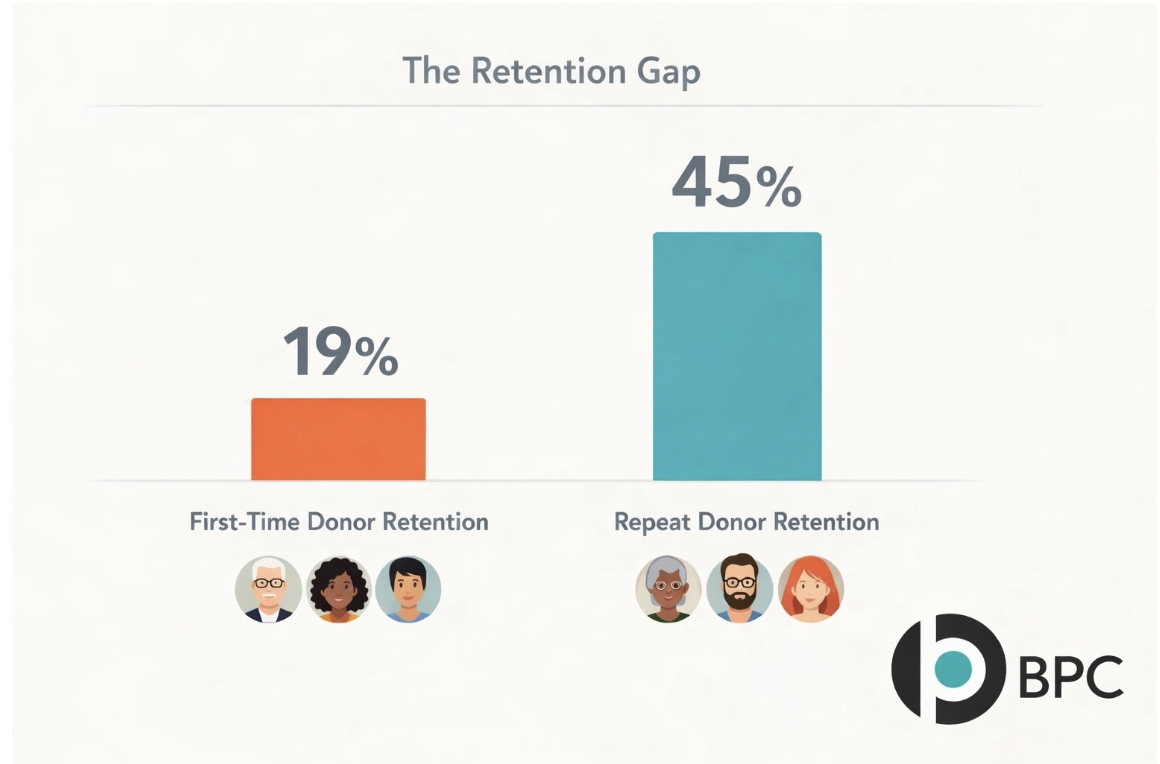
Let’s talk numbers, and let’s be real. According to the latest data from the Urban Institute and the Lilly School of Philanthropy, the average donor retention rate across the sector is hovering at a disappointing 45%. Even more alarming? First-time donor retention is sitting at a dismal 19%.
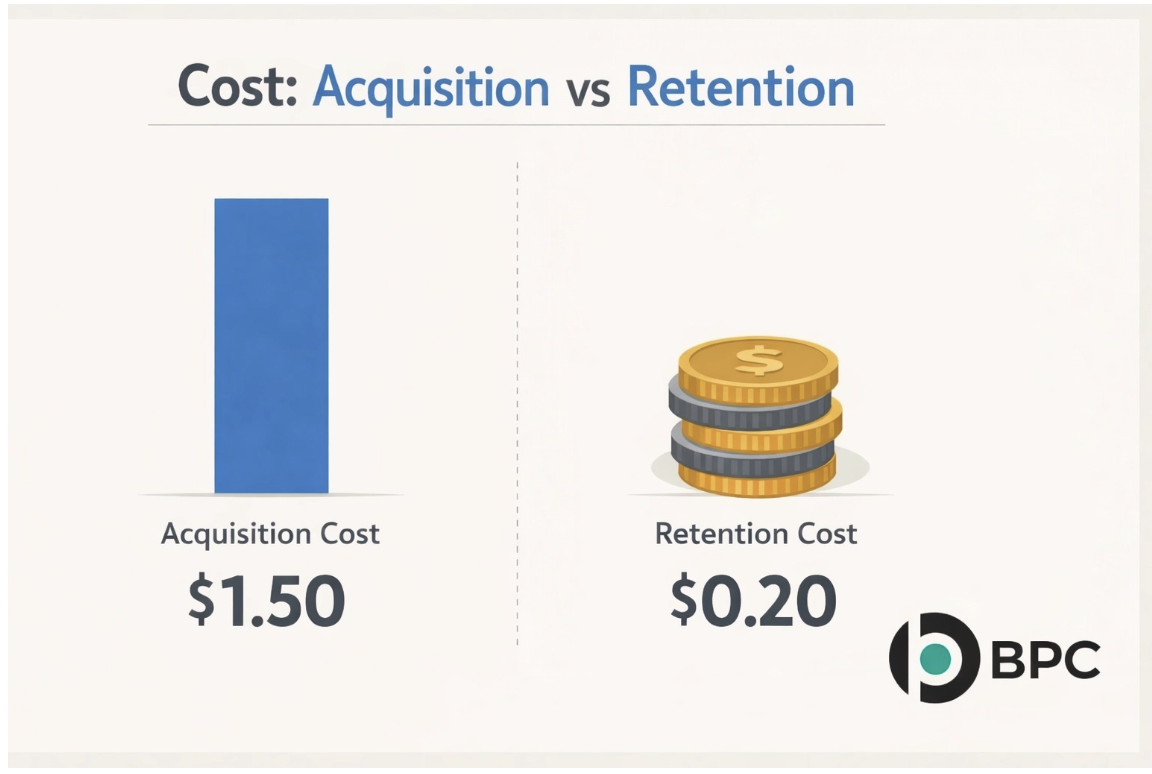
When you realize it costs about $5,000 to replace a single mid-level donor, you start to see that this isn’t just a “fundraising problem”: it’s a sustainability crisis. At Bridge Philanthropic Consulting (BPC), we’ve spent our 800 years of combined experience helping clients raise more than $2B, and we’ve learned one thing: you cannot build a visionary future on a revolving door of one-time gifts.
As our CEO, Dwayne Ashley, puts it: “Traditional fundraising was built for stability: not structural equity. The question is no longer whether you can raise funds; it’s whether your capital strategy reflects the future you claim to build. We have to move beyond the starvation cycle and toward Structural Capital Redesign.”
Here are five ways to fix your retention strategy and build a movement that lasts.

1. SHIFT FROM A SCARCITY MINDSET TO STRUCTURAL CAPITAL REDESIGN
Most organizations approach donors with a “we need your help” vibe. That’s scarcity, and quite frankly, it’s exhausting for everyone involved. To keep donors, you have to invite them into a Capital Redesign. You aren’t just asking for a check; you are asking them to invest in a new architecture and impact.
When we talk about Structural Capital Redesign and Strategic Philanthropic Alignment, we’re talking about moving donors from being “transactors” to “co-architects.” Instead of focusing on the next $50, focus on how their capital helps dismantle the barriers preventing your mission from scaling. Donors want to be part of a solution that is bigger than a Band-Aid. They want to know they are helping you build an endowment, secure sustainability, or launch a systemic change initiative. When the vision is structural, the commitment becomes permanent.
2. LEVERAGE DATA-DRIVEN AI FOR HYPER-PERSONALIZATION
It is 2026. If you are still sending the same “Dear Friend” email to a donor who has been with you for five years and a donor who gave $10 yesterday, you are losing money.
We use AI-driven insights to help our clients understand not just what a donor gives, but why. Data isn’t just numbers; it’s the narrative of human connection. Use AI to segment your audience based on their specific interests: whether that’s education, social justice, or community health.
Dr. Adrian Sargeant puts it plainly: “A 10% improvement in donor retention can double the lifetime value of your donor database. It’s the highest ROI activity in fundraising.” If your data tells you a donor cares about your after-school programs, don’t send them a three-page report on your legislative advocacy. Give them what they crave: a direct line to the impact they care about. At BPC, our value proposition has always been our demonstrated success in securing high-level prospect meetings because we do the homework. We treat every donor like a person, not a line item.

3. NAIL THE ‘SECOND GIFT’ HUSTLE WITHIN 48 HOURS
If you don’t secure a second gift, that first-timer is likely gone forever. Remember that 19% retention stat? That’s where it happens. The gap between the first and second gift is the “danger zone.”
Birgit Smith Burton (Founder of AADO) says it best: “Donor retention isn’t just a metric; it’s a reflection of how well we are building authentic, inclusive relationships with the diverse communities we serve. If we don’t see them, we can’t keep them.”
Penelope Burk, the pioneer of donor-centered fundraising, has proven time and again that the most important thing you can do is say “thank you” promptly and personally. We recommend a multitouch approach:
-
The 24-Hour Email: Immediate confirmation that their gift was received and is already at work.
-
The 48-Hour Personal Touch: A phone call or a personalized video message.
-
The CEO Connection: If it’s a major gift, your CEO needs to be on the phone.
At BPC, we emphasize that your “thank you” should never be followed by another “ask” immediately. It should be followed by a “tell”: tell them exactly what their money is doing before you ever dream of asking for more.
4. STRENGTHEN YOUR REVENUE DIVERSIFICATION ARCHITECTURE
One-time gifts are a gamble; recurring giving is an investment. We need to move toward a model where recurring giving isn’t just an “option” on your website: it’s the heart of your Revenue Diversification Architecture.
In the current economic climate, donors are looking for ways to make an impact without a massive one-time hit to their liquidity. A $25 monthly gift is stickier than a one-time $300 gift. Why? Because it becomes part of their lifestyle.
Encourage your donors to join a “Founders Circle” or a “Sustainability League.” Give these recurring donors exclusive updates, early access to events, and a sense of belonging. We’ve helped our clients close gifts with UHNW (Ultra-High-Net-Worth) prospects by showing them that a diversified revenue stream is a sign of a healthy, stable organization.
5. PRACTICE RADICAL TRANSPARENCY AND IMPACT REPORTING
Donors stay when they trust that their capital is flowing exactly where you said it would. In the era of social media and instant accountability, radical transparency is your best friend.
Don’t just send an annual report six months after the year ends. Use your digital platforms to provide “real-time” impact reporting. Did you just house a family? Post it (with permission). Did your advocacy work result in a policy shift? Send a voice note to your top donors.
As we often say at Bridge Philanthropic Consulting, your donors should never have to wonder if their gift made a difference. They should see the evidence in their inbox, on their feed, and in the community. Trust is the currency of the future. When you show donors where the capital flows, they will keep the tap open.
THE BRIDGE TO THE FUTURE

Fixing your donor retention isn’t about “tricks” or “hacks.” It’s about building a partnership based on shared values and visionary goals. We aren’t just consultants; we are your collaborative partners in this work. We understand the barriers preventing your mission from reaching its full potential, and we have the tools to help you break through them.
With over $2B raised and a team that represents the diverse communities we serve, BPC is uniquely positioned to help you redesign your capital strategy for the long haul.
LET’S BUILD SOMETHING THAT LASTS.
If you’re ready to move beyond the starvation cycle and implement a donor retention strategy that actually works, we’re here to help.
Visit our website to learn more about how we can service your mission.

“We are not just raising money; we are rebuilding trust. If we want to move from a culture of scarcity to one of sustainable abundance, we have to stop treating donors like transactions and start treating them like partners in the future we’re building.” — Dwayne Ashley, CEO of Bridge Philanthropic Consulting.
BPC adheres to the highest ethical standards in its work as a member of the Association of Fundraising Professionals, the Association of African-American Development Officers, and the Giving Institute.

Download The Free BPC Capital Campaign Guide
Running a capital campaign can be a game-changer for your non-profit organization. This comprehensive guide dissects the process and offers expert advice to help you prepare for a successful capital campaign.

