

Thought Leadership
Communicating with Generational Donors: A Guide for Social Justice and Impact Nonprofits
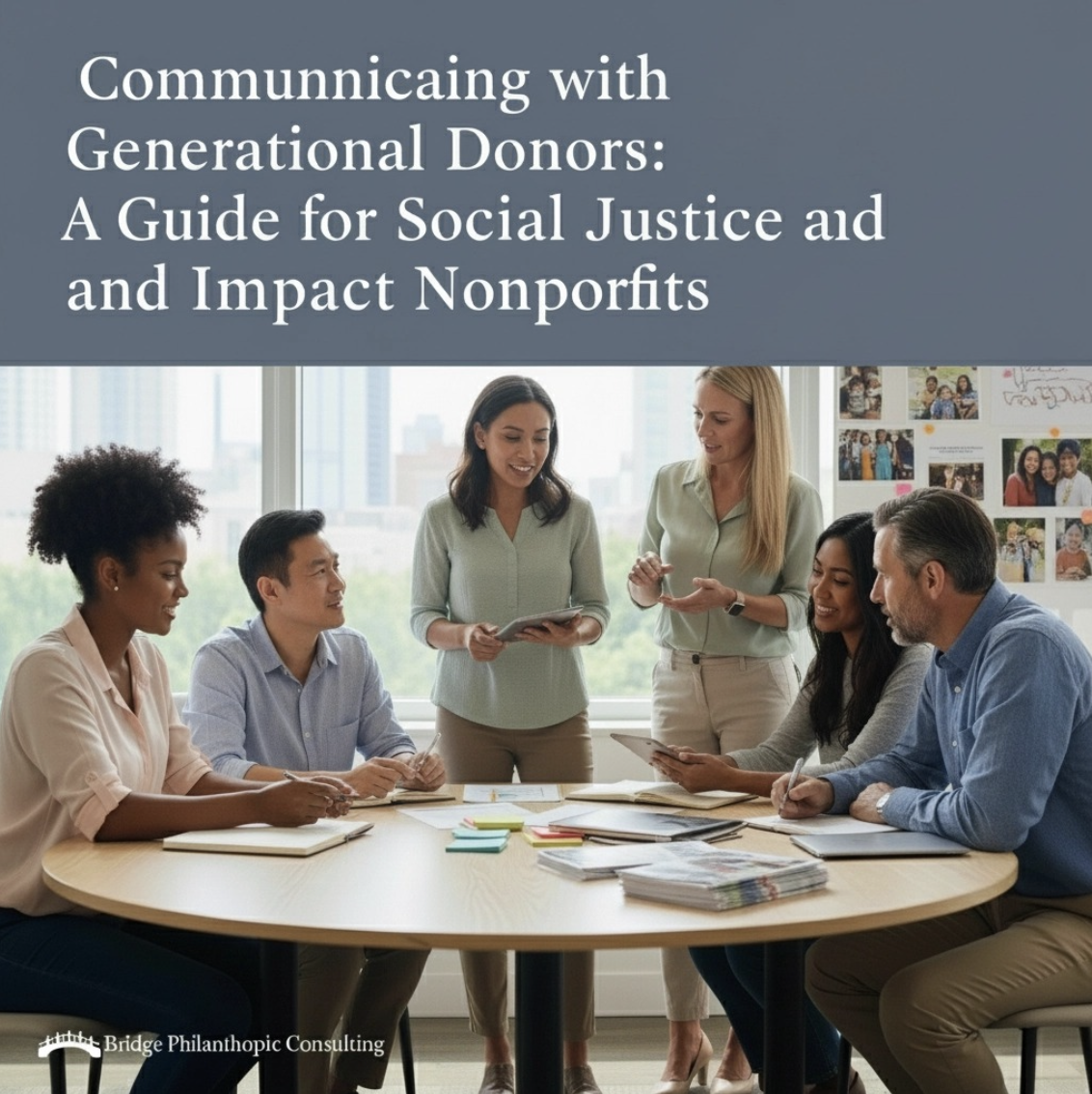
WE BELIEVE THAT EVERY GENERATION HOLDS THE POWER TO DRIVE SYSTEMIC CHANGE when nonprofits understand how to authentically connect with their values, communication preferences, and giving motivations.
At Bridge Philanthropic Consulting, we’ve worked with hundreds of social justice and impact nonprofits to bridge the communication gap between missions and movements across all generational cohorts. This guide provides actionable strategies for connecting with donors from the Silent Generation through Gen Z, ensuring your organization can build sustainable relationships that fuel longterm social impact.
“The future of social justice depends on our ability to unite generations around shared values while honoring their unique perspectives and communication preferences. When we get this right, we don’t just raise funds: we build movements.”
: Dwayne Ashley, CEO, Bridge Philanthropic Consulting
Today’s donor landscape spans five distinct generations, each bringing different communication expectations, technology comfort levels, and philanthropic motivations to their giving decisions. For social justice organizations, this presents both unprecedented opportunity and complex challenges in crafting messages that resonate authentically across age groups.
Understanding Generational Values in Social Justice Giving
AUTHENTIC ALIGNMENT BETWEEN DONOR VALUES AND ORGANIZATIONAL MISSION forms the foundation of successful generational donor communication, particularly within social justice and impact sectors where values-driven giving dominates decision-making processes.
Each generation approaches social justice philanthropy through distinct lenses shaped by their formative experiences, technology adoption patterns, and communication preferences. However, all generations increasingly expect nonprofits to demonstrate clear connections between donations and measurable community impact.
Shared Values Across Generations
Despite different communication styles, our research reveals common threads connecting generational donors to social justice causes:
-
Transparency and Accountability: All age groups demand clear reporting on fund utilization and program outcomes
-
Community-Centered Impact: Donors want to see programs addressing real community needs rather than organization-driven initiatives
-
Values Alignment: Personal values must connect meaningfully with organizational mission and methods
-
Authentic Relationships: Trust-based partnerships matter more than transactional donor-recipient dynamics

“We’ve seen remarkable success when organizations stop trying to convince donors and start building genuine partnerships around shared commitment to justice and equity. Every generation responds to authenticity, though they express and receive it differently.”
: Jennifer Jiles, Executive Consultant, Bridge Philanthropic Consulting
The Silent Generation: Building Legacy Through Impact
THE SILENT GENERATION (BORN 1928-1945) BRINGS DECADES OF CIVIC ENGAGEMENT and
substantial giving capacity to social justice causes, often motivated by desires to create lasting change and meaningful legacy impact.
Communication Preferences
Silent Generation donors respond best to personal, respectful communication through traditional channels. Direct mail campaigns featuring compelling stories and clear impact metrics consistently outperform digital outreach for this demographic. Phone conversations allow for relationship building and demonstrate organizational respect for their time and wisdom.
Messaging Strategies
Frame your appeals around legacy building and long-term community transformation. This generation values understanding how their contributions address root causes of social issues rather than temporary relief efforts. Emphasize the historical context of current social justice challenges and position their giving as continuation of lifelong civic engagement.
Engagement Approaches
-
Personal Recognition: Acknowledge their lifelong commitment to social causes
-
Advisory Roles: Invite participation in strategic planning or program evaluation
-
Peer Connections: Facilitate relationships with other committed donors in their age cohort
-
Legacy Planning: Provide planned giving options that align with their estate planning goals
Baby Boomers: Transparency and Tangible Results
BABY BOOMERS (BORN 1946-1964) DEMAND MEASURABLE OUTCOMES and comprehensive
transparency in their social justice giving, bringing substantial resources and high expectations for organizational accountability.
Communication Preferences
This generation appreciates detailed information delivered through multiple channels, with particular effectiveness in direct mail, email newsletters, and structured phone conversations. They value comprehensive reports showing exactly how donations translate into community impact and systemic change.
Messaging Strategies
Lead with concrete evidence of program effectiveness, including statistics, testimonials, and before-and-after comparisons. Baby Boomers respond to appeals that clearly connect their contributions to specific outcomes and demonstrate organizational efficiency in resource utilization.
“Baby Boomers built their careers on results-driven thinking, and they bring that same expectation to their philanthropy. When we show them exactly how their investment creates measurable change, they become incredibly committed long-term partners.”
: Dwayne Ashley, CEO, Bridge Philanthropic Consulting
Key Focus Areas
-
Financial Stewardship: Provide detailed budgets and expense reports
-
Program Metrics: Share quantified outcomes and impact measurements
-
Community Voices: Include beneficiary testimonials and community feedback
-
Organizational Governance: Highlight board composition and oversight processes
Generation X: Practical Impact and Efficient Engagement
GENERATION X (BORN 1965-1980) SEEKS EFFICIENT, PRACTICAL APPROACHES to social justice giving, valuing organizations that demonstrate clear paths from donation to community transformation without excessive administrative overhead.
Communication Preferences
Gen X donors appreciate concise, informative communications that respect their time constraints while providing sufficient detail for informed decision-making. Email campaigns, well-designed websites, and brief phone conversations work effectively when focused on practical outcomes.
Messaging Strategies
Emphasize efficiency, practicality, and direct impact. This generation responds to straightforward explanations of how donations address specific community challenges and create sustainable change. Avoid overly emotional appeals in favor of logical presentations of need and solution.
Engagement Opportunities
-
Volunteer Leadership: Offer project management roles that utilize professional skills
-
Committee Participation: Invite involvement in focused, time-limited initiatives
-
Peer-to-Peer Fundraising: Support their efforts to engage professional networks
-
Skills-Based Contributions: Create opportunities for pro bono professional services
“Generation X donors want to cut through the noise and see real results. They’re incredibly generous when they understand exactly how their contribution creates change, but they don’t have patience for inefficiency or unclear messaging.”
: Jennifer Jiles, Executive Consultant, Bridge Philanthropic Consulting
Millennials and Gen Z: Authentic Storytelling and Digital Connection
MILLENNIALS (BORN 1981-1996) AND GEN Z (BORN 1997-2012) DRIVE SOCIAL JUSTICE MOVEMENTS through digital engagement, peer networks, and demands for authentic organizational transparency and community-centered approaches.
Communication Preferences
These generations expect seamless digital experiences across multiple platforms, with particular engagement through Instagram, TikTok, email, and text messaging. They value interactive content, visual storytelling, and opportunities for immediate engagement and sharing.
Messaging Strategies
Lead with authentic narratives that center community voices and demonstrate real-world impact through visual content, video testimonials, and compelling photography. Younger donors respond to organizations that acknowledge systemic challenges while presenting clear paths toward justice and equity.
“Millennials and Gen Z don’t just want to give money: they want to be part of the movement. They’re looking for organizations that understand social media as a tool for justice, not just fundraising. When we create content that they can share with pride, we’re not just reaching donors, we’re building community.”
: Marisha Johnson Patterson, Senior Consultant, Bridge Philanthropic Consulting

Digital Engagement Tactics
-
Instagram Stories: Share behind-the-scenes content and real-time program updates
-
Video Content: Create short, compelling videos featuring community voices and program impact
-
Interactive Campaigns: Develop hashtag campaigns and user-generated content opportunities
-
Mobile Optimization: Ensure all donation and engagement processes work seamlessly on mobile devices
-
Peer-to-Peer Fundraising: Support their efforts to engage friends and social networks
Multi-Channel Communication Strategies
SUCCESSFUL GENERATIONAL DONOR COMMUNICATION REQUIRES INTEGRATED APPROACHES that honor each generation’s preferences while maintaining consistent organizational messaging across all platforms and touchpoints.
Channel Selection by Generation
Rather than limiting outreach to single channels, implement segmented communication strategies that reach each generation through their preferred methods while maintaining opportunities for cross-generational engagement.
Traditional Channels (Silent Generation, Baby Boomers):
-
Direct mail with compelling stories and clear calls to action
-
Personal phone calls for relationship building and stewardship
-
In-person events and face-to-face meetings
-
Detailed email newsletters with comprehensive program updates
Digital Channels (Gen X, Millennials, Gen Z):
-
Segmented email campaigns tailored to generational interests
-
Social media content optimized for platform-specific audiences
-
Text messaging for time-sensitive updates and engagement opportunities
-
Mobile-optimized websites with seamless donation processes
Content Strategy Framework
Develop core messages that translate effectively across channels while honoring generational communication preferences. This approach ensures consistency while allowing for customization based on audience expectations.
“The key is understanding that every generation cares deeply about social justice: they just express and engage with it differently. Our job is to meet them where they are while staying true to our mission and values.”
: Dwayne Ashley, CEO, Bridge Philanthropic Consulting
Implementation Framework
TRANSFORM YOUR GENERATIONAL DONOR COMMUNICATION THROUGH SYSTEMATIC IMPLEMENTATION of research-based strategies that honor each age group’s preferences while building cohesive organizational relationships across all donor segments.
Step 1: Donor Segmentation and Analysis
Begin by analyzing your current donor database to identify generational patterns in giving behavior, communication preferences, and engagement levels. This data provides the foundation for targeted communication strategies.
Step 2: Content Development
Create core messaging frameworks that can be adapted for each generational audience while maintaining consistent organizational voice and mission focus. Develop templates for each communication channel that honor generational preferences.
Step 3: Channel Integration
Implement multi-channel approaches that reach each generation through preferred methods while creating opportunities for cross-generational engagement through events, campaigns, and community initiatives.
Step 4: Measurement and Optimization
Track engagement metrics across generational segments to identify successful strategies and areas for improvement. Regular analysis ensures continuous optimization of communication approaches.
Key Performance Indicators
-
Engagement Rates: Email open rates, social media engagement, and response rates by generation
-
Donation Patterns: Giving frequency, amount, and retention rates across age groups
-
Communication Preferences: Channel preferences and response rates for different message types
-
Community Feedback: Donor satisfaction and feedback on communication approaches
“Implementation success comes from treating this as an ongoing relationship-building process rather than a one-time communication overhaul. We help organizations develop systems that evolve with their donor communities.”
: Jennifer Jiles, Executive Consultant, Bridge Philanthropic Consulting
Conclusion and Next Steps
BUILDING BRIDGES BETWEEN GENERATIONS AND JUSTICE REQUIRES INTENTIONAL COMMUNICATION that honors the unique perspectives, experiences, and preferences each age group brings to social change work while fostering collaborative relationships across generational lines.
The future of social justice philanthropy depends on organizations that can authentically connect with donors across all generations, creating sustainable funding streams that support long-term systemic change. This requires moving beyond one-size-fits-all approaches toward sophisticated, relationship-based communication strategies.
Moving Forward
Successful implementation of generational donor communication begins with authentic commitment to understanding and honoring each age group’s contributions to social justice movements. Organizations that invest in these relationships build stronger communities, more sustainable funding, and greater collective impact.
At Bridge Philanthropic Consulting, we partner with social justice and impact nonprofits to develop and implement communication strategies that connect missions with movements across every generation. Our approach honors the wisdom and experience of older donors while embracing the energy and digital fluency of younger generations.
Resources and Support
For organizations ready to transform their generational donor communication, Bridge Philanthropic Consulting offers comprehensive support through strategic planning, implementation guidance, and ongoing optimization services tailored to your unique community and mission.
Connect with us at: bridgephilanthropicconsulting.com
Learn more about our approach: bridgephilanthropicconsulting.com/thought-leadership
Meet our team: bridgephilanthropicconsulting.com/our-team

Download The Free BPC Capital Campaign Guide
Running a capital campaign can be a game-changer for your non-profit organization. This comprehensive guide dissects the process and offers expert advice to help you prepare for a successful capital campaign.

