

Thought Leadership
The first trillionaire is almost here. The first trillion-dollar philanthropist is not.
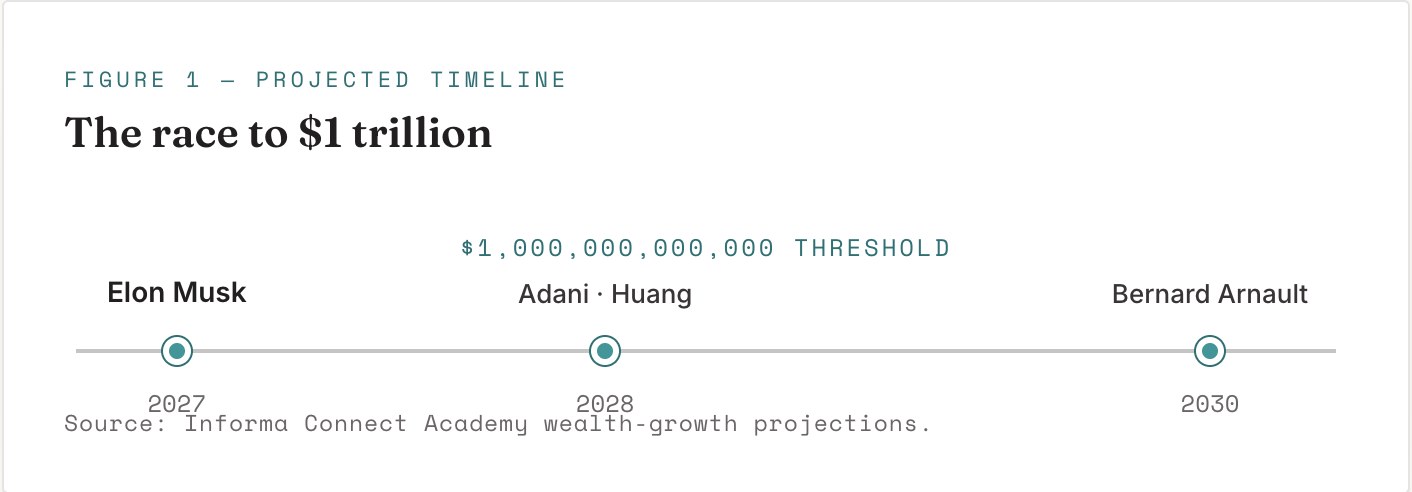
Elon Musk is on track to become the world’s first trillionaire. Informa Connect Academy projects he could cross the line as early as 2027, with Gautam Adani, Jensen Huang, and Bernard Arnault following close behind. A threshold humanity has never reached is becoming a matter of arithmetic, not possibility.
But a trillion-dollar fortune does not make a trillion-dollar philanthropist. That distinction is the one the sector is not yet organized around — and it is the one that will matter most.
Musk signed the Giving Pledge in 2012, committing to give away at least half his wealth. At a trillion dollars, half is $500 billion — a sum that would dwarf the combined assets of America’s largest private foundations. The question is no longer whether the capacity exists. It is whether the sector can absorb capital at that altitude, and whether it will reach the communities that need it most.
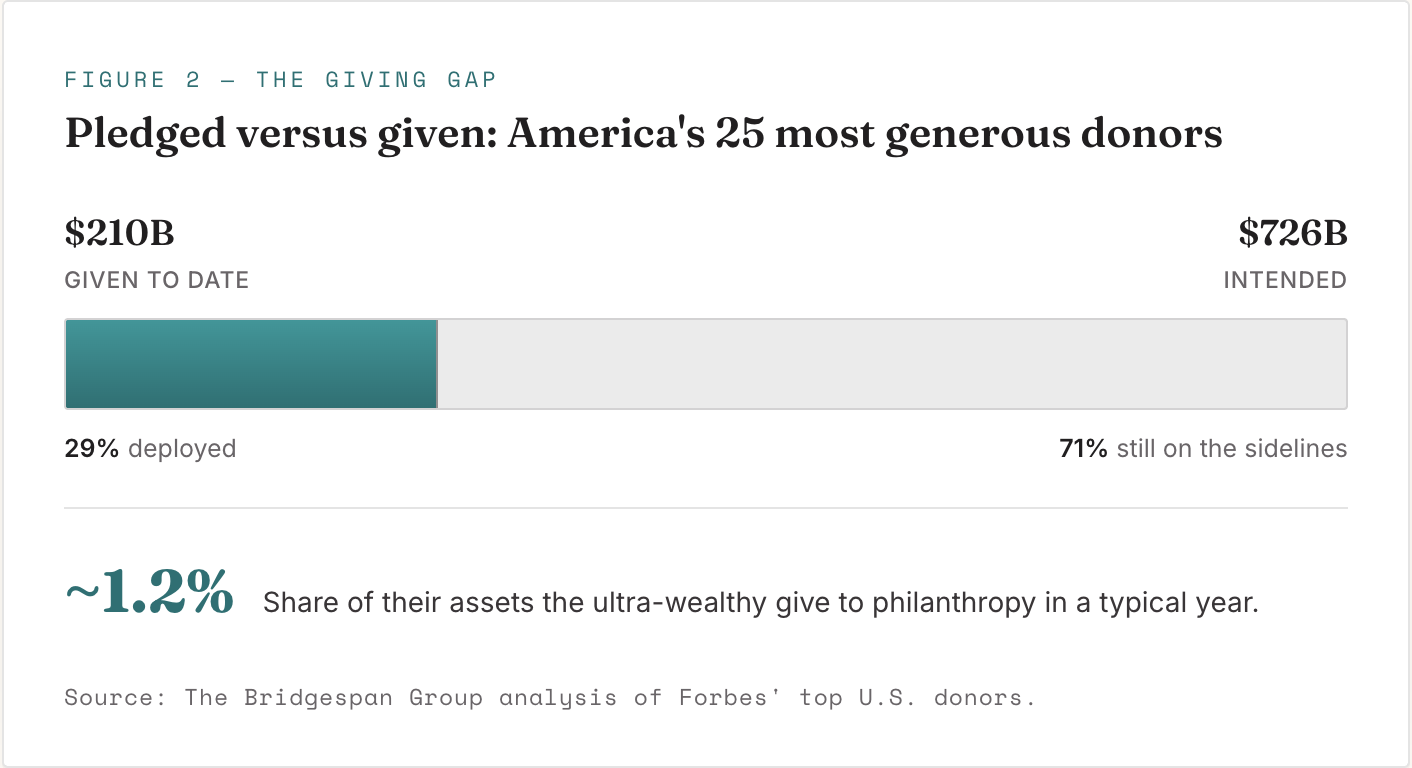
The evidence counsels urgency. Bridgespan found that America’s top 25 donors intend to give away roughly $726 billion but have given about $210 billion to date — less than a third of what they have promised. Across the ultra-wealthy, families give barely over one percent of their assets each year. The capital exists. The intent, on paper, exists. What is missing is the infrastructure to connect it to impact.
Musk himself has named the difficulty. “It is very difficult to give away money effectively,” he has said. Writing the check is the easy part. Deploying it with rigor, accountability, and measurable results is the hard one.
“It is very difficult to give away money effectively.” – Elon Musk
This is the inflection point. As trillion-dollar wealth arrives, the binding constraint shifts from raising mega-gifts to absorbing and directing them. Most nonprofits are not built to receive nine- and ten-figure commitments; they lack the balance sheets, governance, and deployment capacity to use them well. Left unaddressed, that gap quietly steers historic capital toward a handful of large, familiar institutions — and away from the diverse-led and frontline organizations closest to the need.
That is both the defining risk and the defining opportunity of the trillion-dollar era. Concentrated giving can entrench a narrow set of priorities, or it can be architected to widen who holds power in the philanthropic economy. The outcome will be decided not by the size of the fortune, but by the design of its deployment.
The first trillion-dollar fortune will test whether our sector can do more than celebrate the gift. Our work is to build the architecture that turns historic capital into lasting, equitable impact — and that work must begin long before the check is ever written.
DWAYNE ASHLEY Founder & CEO, Bridge Philanthropic Consulting, LLC
The sector should plan now — building the receiving capacity, governance readiness, and pooled structures that let transformational capital land where it should. The first trillion-dollar gift is coming. Whether it becomes the most consequential act of philanthropy in history, or merely the most concentrated, depends on the architecture we build to receive it.
Where Bridge Stands
Bridge Philanthropic Consulting helps donors and institutions turn extraordinary capital into Capital Social Impact™ — designing the campaigns, governance, and structures that make transformational giving land with rigor, accountability, and reach.

Download The Free BPC Capital Campaign Guide
Running a capital campaign can be a game-changer for your non-profit organization. This comprehensive guide dissects the process and offers expert advice to help you prepare for a successful capital campaign.

